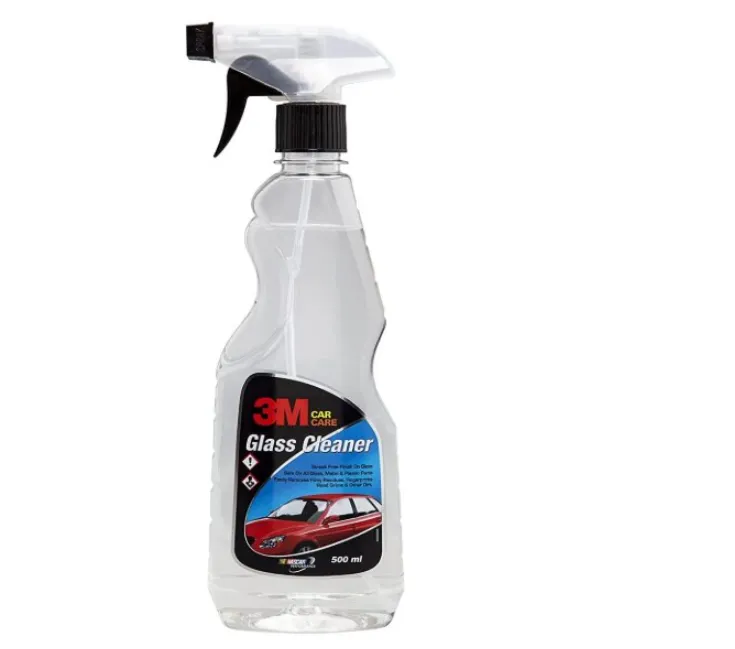
Customers often judge a detailing service by the final details. Clean paint is important, but streaked glass, greasy dashboards, or poorly finished tyres can make an otherwise thorough job feel incomplete.
This makes finishing products an important part of a professional detailing inventory.
For automotive businesses in Pune, choosing glass cleaners, tire dressings, and car interior cleaners according to the surfaces being treated can improve both workflow and presentation.
Glass Cleaning Requires the Right Combination
Automotive glass can collect fingerprints, dust, traffic film, interior vapours, and residues from previous cleaning products.
The goal is not simply to make glass look clean from one angle. It should remain clear when viewed under changing light conditions.
Professional glass cleaning usually depends on both the cleaner and the towel.
A suitable low-lint or glass-specific microfiber can help reduce streaks. Separate towels for the initial cleaning and final finishing pass may also be useful when the glass is particularly dirty.
Always check compatibility when working around aftermarket films or specialised surfaces.
Tire Dressing Should Follow Cleaning
Applying dressing directly over dirty tyres can produce inconsistent appearance and may reduce the quality of the finish.
Tyres should first be cleaned appropriately and allowed to reach the condition required by the dressing instructions.
Professionals can then select the desired finish according to the product and customer preference.
Some customers prefer a more natural-looking tyre, while others like a stronger dressed appearance.
Application should be controlled rather than excessive. Unnecessary product left on the tyre can create mess and waste.
Interior Cleaning Is Not One-Surface Work
Modern vehicle cabins contain many materials.
A single interior may include plastics, synthetic trim, fabric, screens, gloss panels, leather or leather-like surfaces, carpets, and glass.
One aggressive cleaner should not automatically be used everywhere.
Before applying a product, identify the surface and check whether the cleaner is appropriate for it.
This is especially important for delicate screens, coated trim, instrument clusters, and speciality finishes.
Avoid an Artificially Greasy Interior
Customers often want a cabin that looks clean rather than one covered in heavy shine.
Excessive dressing can leave steering wheels, controls, or other frequently touched areas unpleasant or potentially unsuitable.
Cleaning and dressing should therefore be treated as separate decisions.
Some surfaces need cleaning only. Others may accept an appropriate protectant or finishing product according to manufacturer guidance.
Create Packages Around Vehicle Condition
A useful detailing menu can distinguish between maintenance cleaning and deeper restoration-oriented work.
For example, a basic finishing package may focus on glass, dashboard cleaning, vacuuming, and tyre presentation.
A more comprehensive interior service may require additional treatment for upholstery, carpets, crevices, stains, and specialised materials.
This prevents customers from assuming that every interior problem is included in a basic cleaning service.
Standardise Product Use Across Technicians
In multi-technician studios, inconsistent chemical use can create inconsistent results.
Consider documenting
- Which product is used on each surface
- Recommended dilution where applicable
- Application method
- Suitable towel or brush
- Areas requiring caution
- Final inspection procedure
This also helps control consumption.
If one technician uses several times more product than another to achieve the same result, unnecessary chemical cost can accumulate across hundreds of vehicles.
Stock Finishing Products as a System
Pune detailing businesses often need to manage a broad range of vehicles, from daily commuters and commercial vehicles to premium cars receiving specialist detailing.
Instead of purchasing isolated chemicals whenever stock runs out, it can be more efficient to create a defined finishing inventory.
S T Sales supplies car detailing and automotive refinishing products in Pune, making it possible for workshops to source multiple categories according to their service requirements.
Before purchasing, businesses should review monthly vehicle volume, the surfaces they commonly encounter, technician preferences, storage capacity, and package pricing.
Finishing products may represent the final stage of a detailing job, but they should not be an afterthought. Clear glass, appropriately finished tyres, and correctly cleaned interior surfaces help create the complete visual result customers expect when collecting a professionally detailed vehicle.
Keywords